

 2026-04-28T11:53:49.000Z
AI video generation has moved from novelty to necessity. Creators, studios, and marketers all want the same thing - cinematic video from a text prompt, with control over motion, lighting, and audio. 2 models stand out right now: Seedance 2.0 from ByteDance and Happy Horse 1.0, the open-source contender.
This Seedance 2.0 vs Happy Horse 1.0 comparison covers architecture, features, speed, quality, pricing, and real-world use cases. If you are trying to decide between Seedance 2.0 vs Happy Horse 1.0 for your next project, this guide will help you make the right choice. The Seedance 2.0 vs Happy Horse 1.0 debate is one of the most discussed topics in AI video generation right now.
What Is Seedance 2.0?
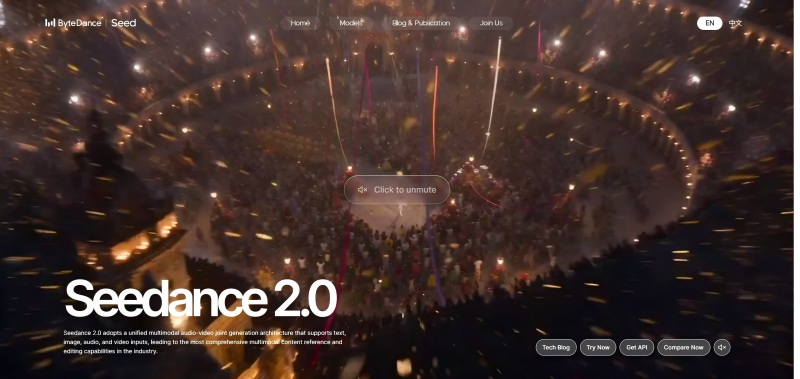
Seedance 2.0 is a multi-modal AI video generation model developed by ByteDance. It accepts text, images, audio, and video as inputs and produces high-definition video with strong motion coherence.
The model is designed for creators who need precise control. Lighting, shadow, camera movement, and character performance are all adjustable through natural language prompts and reference materials. Seedance 2.0 supports text-to-video, image-to-video, and video extension workflows.
Key capabilities:
· Multi-modal input (text, image, audio, video)
· Full control over performance, lighting, and camera movement
· Multi-shot consistency with character identity preservation
· HD output with smooth motion synthesis
· Seamless video extension
· Commercial platform with tiered pricing
Seedance 2.0 operates as a cloud-based service. Users access it through the ByteDance Seed platform or third-party integrations like Seeddance.app. There is a free tier for testing, with paid plans for higher resolution, longer generations, and priority processing.
What Is Happy Horse 1.0?
Happy Horse 1.0 is an open-source AI video generation model built on a 15-billion-parameter, 40-layer self-attention Transformer architecture. It is the only open-source model with native joint audio-video synthesis — meaning it generates video and synchronized audio in a single pass.
Happy Horse 1.0 stands out for speed. Thanks to DMD-2 distillation, it needs only 8 denoising steps (no CFG required). On an H100 GPU, it produces 1080p video in roughly 38 seconds. That is significantly faster than most comparable models.

Key capabilities:
· 15B-parameter unified Transformer (40 layers)
· Native joint audio-video generation
· 7-language lip-sync (English, Mandarin, Cantonese, Japanese, Korean, German, French) with ultra-low word error rate
· 1080p output in ~38 seconds on H100
· 8 denoising steps via DMD-2 distillation
· Fully open source (base model, distilled model, super-resolution module, inference code)
· Multi-shot narrative with persistent character identity
· Self-hosting and fine-tuning support
· Commercial usage rights included
Happy Horse 1.0 is available through its own platform (happy-horse.ai / happy-horse.art) with three pricing tiers, or self-hosted for free using the open-source code on Hugging Face and GitHub.
Seedance 2.0 vs Happy Horse 1.0: Head-to-Head Comparison
When comparing Seedance 2.0 vs Happy Horse 1.0, several key dimensions matter most to creators and studios. This Seedance 2.0 vs Happy Horse 1.0 breakdown covers architecture, input flexibility, video quality, audio capabilities, speed, open-source access, and pricing. Understanding the Seedance 2.0 vs Happy Horse 1.0 differences helps you choose the right tool for your specific workflow.
Architecture and Model Design
Seedance 2.0 uses a multi-modal diffusion-based architecture built for visual fidelity. It processes text, image, audio, and video references through separate but coordinated pathways, giving creators granular control over each visual element.
Happy Horse 1.0 takes a different approach. Its 15B-parameter unified Transformer processes all modalities - text, image, video, and audio - in a single sequence. The sandwich architecture places modality-specific layers at the start and end, with 32 shared-parameter layers in the middle. Per-head gating enables seamless fusion across modalities.
In the Seedance 2.0 vs Happy Horse 1.0 architecture comparison: Seedance 2.0 excels at visual precision and reference fidelity. Happy Horse 1.0 excels at unified audio-video generation and speed. The Seedance 2.0 vs Happy Horse 1.0 architectural choices reflect different design philosophies.
Input Flexibility
Both models support multiple input types, but they handle them differently.
Seedance 2.0 accepts text prompts, reference images, audio clips, and video clips. Users can upload end-frame images, return last frames for video extension, and combine multiple references in a single generation. The prompt field supports up to 5,000 characters of natural language description.
Happy Horse 1.0 accepts text or image prompts, with optional language selection for lip-sync. It supports text-to-video, image-to-video, and multi-shot narrative generation from a single prompt. The input workflow is simpler — describe your scene or upload a photo, choose resolution and aspect ratio, select a lip-sync language, and generate.
Seedance 2.0 offers more granular input control. Happy Horse 1.0 offers a more streamlined experience. This is a key difference in the Seedance 2.0 vs Happy Horse 1.0 comparison.
Video Quality and Resolution
Seedance 2.0 produces high-definition video with strong motion coherence. The model is built for cinematic quality — smooth camera movement, realistic lighting, and consistent character appearance across shots.
Happy Horse 1.0 outputs native 1080p video, with claims of 2K cinema-grade output on higher tiers. The model supports 5-12 second clips in 6 aspect ratios (16:9, 9:16, 4:3, 3:4, 21:9, 1:1). Physical realism is a stated strength, particularly for image-to-video workflows.
Both models deliver competitive quality. Seedance 2.0 has an edge in multi-shot consistency and lighting control. Happy Horse 1.0 has an edge in generation speed at equivalent resolution. The Seedance 2.0 vs Happy Horse 1.0 quality comparison shows both models are capable, but with different strengths.
Audio and Lip-Sync
This is where the Seedance 2.0 vs Happy Horse 1.0 comparison gets interesting.
Seedance 2.0 supports audio as a reference input, but audio-video sync is not its core differentiator. Audio generation is handled through separate tools in the Seedance ecosystem.
Happy Horse 1.0 generates video and audio jointly in a single pass. Dialogue, ambient sounds, and Foley effects are all produced together, perfectly synchronized. The model supports lip-sync in 7 languages with ultra-low word error rate. No post-production dubbing is required.
For creators who need spoken dialogue or synchronized sound, Happy Horse 1.0 has a clear advantage in the Seedance 2.0 vs Happy Horse 1.0 comparison.
Speed and Performance
Seedance 2.0 generation times vary by workload and plan. Typical ranges are videos in minutes, images in seconds, and audio in under a minute. Priority queue access reduces wait times for paid subscribers.
Happy Horse 1.0 is notably faster. On H100 hardware, 1080p generation takes ~38 seconds. A 5-second 256p video takes ~2 seconds. The DMD-2 distillation (8 denoising steps) and MagiCompiler acceleration are the key enablers. For self-hosted deployments, speed depends on available GPU resources.
Happy Horse 1.0 wins on raw speed. Seedance 2.0 compensates with more granular control and a managed cloud experience. The Seedance 2.0 vs Happy Horse 1.0 speed difference is significant for high-volume creators.
Open Source vs. Closed Platform
Seedance 2.0 is a closed-source, cloud-based platform. Users access it through ByteDance's Seed platform or third-party integrations. The model weights and architecture details are not publicly available. This means no self-hosting, no fine-tuning, and no custom modifications.
Happy Horse 1.0 is fully open source. The base model, distilled model, super-resolution module, and inference code are all available. Users can self-host on their own infrastructure, fine-tune for custom use cases, and modify the architecture. Commercial usage rights are included.
For studios that need custom models or data privacy, Happy Horse 1.0's open-source approach is a significant advantage. For creators who want a ready-to-use cloud platform, Seedance 2.0 is simpler. The Seedance 2.0 vs Happy Horse 1.0 open-source question is a major factor for many teams.
Pricing
Seedance 2.0 uses a credit-based pricing model. Credits are consumed per second of video generation. When video input is included as reference, credits are calculated based on the combined duration of input and output video. A free tier is available for testing core features. Paid plans unlock higher resolutions, longer generations, batch runs, and priority queues. Specific pricing is available on the Seedance platform.
Happy Horse 1.0 offers three subscription tiers:
· $11.90/month — 540 credits monthly (~54 videos), 1080p generation, 7-language lip-sync
· $39.90/month — 2040 credits monthly (~204 videos), priority queue access, native audio-video joint generation
· $99.99/month — 6000 credits monthly (~600 videos), fastest processing, dedicated account manager, full commercial rights
Alternatively, users can self-host Happy Horse 1.0 for free using the open-source code, paying only for GPU infrastructure.
Happy Horse 1.0 offers more transparent and competitive pricing, especially with the self-hosting option. The Seedance 2.0 vs Happy Horse 1.0 pricing comparison favors Happy Horse 1.0 for budget-conscious users.
Who Should Use Seedance 2.0?
Seedance 2.0 is a strong choice when the Seedance 2.0 vs Happy Horse 1.0 decision comes down to visual control and managed platform needs:
· Creators who need visual precision — granular control over lighting, shadow, camera movement, and character performance
· Teams already in the ByteDance ecosystem — seamless integration with other ByteDance tools
· Users who prefer a managed platform — no infrastructure setup, no GPU requirements, just upload and generate
· Projects requiring video extension — extending existing videos with consistent style and characters
Seedance 2.0 is less ideal for creators who need native audio-video sync, want to self-host, or require open-source flexibility.
Who Should Use Happy Horse 1.0?
Happy Horse 1.0 is a strong choice when the Seedance 2.0 vs Happy Horse 1.0 decision comes down to audio, speed, and flexibility:
· Creators who need audio-video sync — native joint generation with 7-language lip-sync
· Studios that want open-source flexibility — self-host, fine-tune, modify
· Teams with GPU infrastructure — generate 1080p video in ~38 seconds on H100
· Multilingual content creators — lip-sync in English, Mandarin, Cantonese, Japanese, Korean, German, and French
· Budget-conscious creators — transparent pricing starting at $11.90/month, or free self-hosting
Happy Horse 1.0 is less ideal for users who want a fully managed cloud experience with no technical setup, or who need the deepest visual reference control.
Seedance 2.0 vs Happy Horse 1.0: Quick Comparison Table
| Feature | Seedance 2.0 | Happy Horse 1.0 |
|---|---|---|
| Developer | ByteDance | Happy Horse AI |
| Architecture | Multi-modal diffusion | 15B unified Transformer |
| Model Parameters | Not disclosed | 15 billion |
| Open Source | No | Yes (full release) |
| Input Types | Text, image, audio, video | Text, image, video, audio |
| Video Resolution | HD | 1080p native, 2K on higher tiers |
| Audio-Video Sync | Separate tools | Native joint generation |
| Lip-Sync Languages | Not specified | 7 languages |
| Generation Speed | Minutes (cloud) | ~38s for 1080p (H100) |
| Denoising Steps | Not specified | 8 (DMD-2) |
| Multi-Shot Consistency | Yes | Yes |
| Self-Hosting | No | Yes |
| Pricing | Credit-based, free tier | $11.90-$99.99/mo or free self-host |
| Commercial Rights | Plan-dependent | Included |
FAQ
Is Seedance 2.0 better than Happy Horse 1.0?
It depends on the use case. When comparing Seedance 2.0 vs Happy Horse 1.0, Seedance 2.0 offers more granular visual control and a managed cloud platform. Happy Horse 1.0 offers faster generation, native audio-video sync, and open-source flexibility. The Seedance 2.0 vs Happy Horse 1.0 comparison is not about which is universally better — it is about which fits your specific needs.
Can I use both models together?
Yes. Many creators use Seedance 2.0 for visual-heavy scenes that need precise lighting and camera control, and Happy Horse 1.0 for dialogue scenes that need lip-sync and audio generation. They complement each other well. AIGPTS is the AI platform who collects almost all AI Models, like: GPT-5.5, ChatGPT Images 2.0, Happy Horse 1.0, Seedance 2.0...

Is Happy Horse 1.0 really free?
The open-source model is free to download and self-host. You pay only for GPU infrastructure. The hosted platform (happy-horse.ai) has paid subscription plans starting at $11.90/month. New users may receive free credits to test the platform.
Does Seedance 2.0 support audio generation?
Seedance 2.0 accepts audio as a reference input. Audio generation (text-to-music, voice cloning, SFX) is available through separate tools in the Seedance ecosystem, not as part of the core video model.
Which model is better for multilingual content?
Happy Horse 1.0 has native lip-sync in 7 languages with ultra-low word error rate. Seedance 2.0 does not advertise multilingual lip-sync as a core feature. For multilingual dialogue content, Happy Horse 1.0 is the stronger choice.
Conclusion
The Seedance 2.0 vs Happy Horse 1.0 comparison comes down to priorities. Seedance 2.0 is the better choice for creators who need granular visual control, a managed cloud platform, and deep integration with ByteDance's ecosystem. Happy Horse 1.0 is the better choice for creators who need native audio-video sync, open-source flexibility, faster generation, and multilingual lip-sync.
Both models represent the cutting edge of AI video generation. Whether you choose Seedance 2.0 or Happy Horse 1.0, the right decision depends on your workflow, your technical resources, and the kind of content you create. The Seedance 2.0 vs Happy Horse 1.0 landscape is evolving fast — both models will continue to improve.